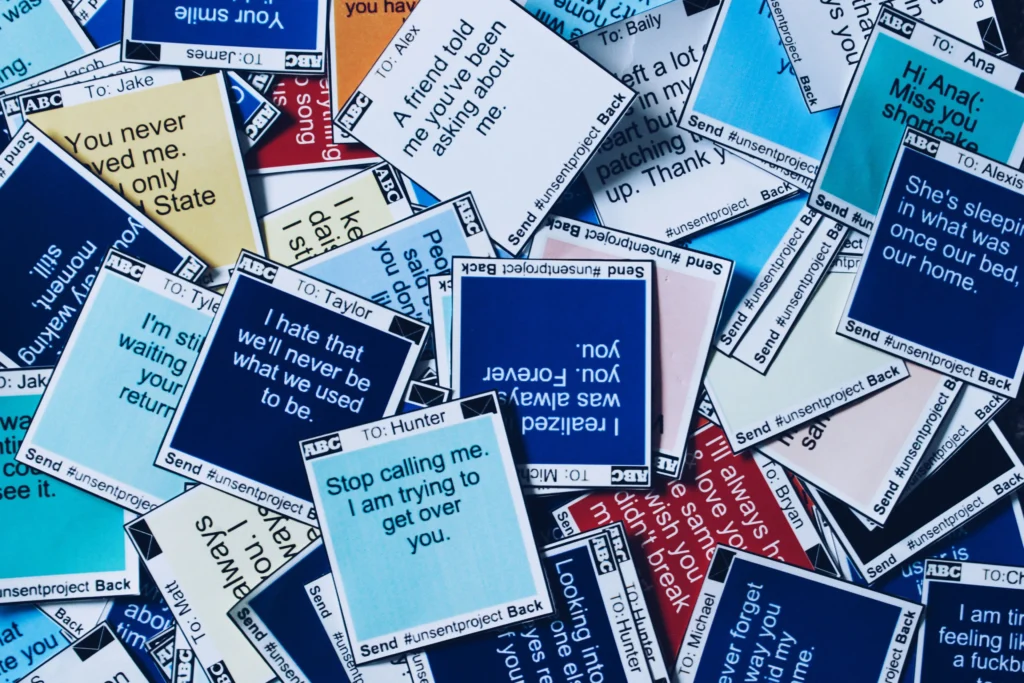

In a world where communication is instant and constant, millions of people still hold back words they never send. The Unsent Project transforms those silent messages into a powerful digital archive of love, loss, regret, and longing. What began as an art experiment has evolved into one of the internet’s most emotionally raw and widely shared platforms.
Today, The Unsent Project contains millions of anonymous submissions from people around the world. Each message represents something that was felt deeply — but never delivered.
This article explores the origins, meaning, emotional psychology, cultural relevance, and lasting impact of The Unsent Project.
What Is The Unsent Project?
The Unsent Project is an anonymous digital archive where people submit text messages they never sent to their first love — or to someone who significantly impacted their life.
Instead of sending the message, contributors submit it publicly and anonymously. Each entry becomes part of a growing online emotional archive.
The submission process is simple:
- Write the message you never sent
- Choose a color representing the emotion behind it
- Submit anonymously
With millions of entries, The Unsent Project has become one of the largest collections of unspoken emotional expression on the internet.
At its core, it is not just a website — it is a living social art experiment documenting human vulnerability.
Who Created The Unsent Project?
Rora Blue launched The Unsent Project in 2015.
Originally created on Tumblr, the project started as an artistic exploration of how people associate colors with love. Blue asked a simple but powerful question:
What color do you associate with your first love?
As submissions grew, the project evolved. It became more than a color study — it turned into a global archive of emotional honesty.
Blue has described the project as a way to understand how people process connection, heartbreak, memory, longing, and unresolved emotion.
Why Do People Write Unsent Messages?
Everyone has typed something they never sent.
It might have been:
- A confession of love
- An apology
- A message after a breakup
- Words to someone who passed away
- Anger that felt too risky to express
- Closure that never came
Unsent messages live in the space between feeling and action. They hold vulnerability without consequence.
The Unsent Project gives those thoughts a safe place to exist.
The Meaning Behind the Colors
One of the defining features of The Unsent Project is its use of color.
Every submission appears against a colored background selected by the writer. These colors symbolize emotional associations.
Common interpretations include:
- Red – Passion and intense love
- Blue – Sadness and longing
- Black – Grief or emotional pain
- Yellow – Nostalgia mixed with hope
- Green – Jealousy or unresolved emotion
The color system transforms emotion into something visual. It turns abstract feeling into something immediately recognizable.
This visual structure also makes The Unsent Project instantly identifiable across social media platforms.
The Unsent Project Is About More Than Romance
Although originally centered around “first love,” submissions quickly expanded beyond romantic relationships.
Messages are often addressed to:
- Best friends
- Parents
- Former partners
- People who never reciprocated feelings
- Estranged family members
- People who passed away
This reveals something important: emotional impact is not limited to romantic love.
Some of the most powerful entries are about regret, grief, forgiveness, or missed opportunities.
The Unsent Project captures the full spectrum of human attachment.
The Psychology Behind Unsent Messages
Why does writing something without sending it feel powerful?
When people experience love or deep emotional attachment, the brain releases dopamine and oxytocin. These chemicals strengthen emotional bonds.
When that bond breaks, the absence can feel physically painful.
Writing unsent messages can help by:
- Allowing safe emotional expression
- Creating symbolic closure
- Reducing repetitive thoughts
- Turning feelings into language
Even if the intended person never reads the message, the act of writing it can provide relief.
The Unsent Project scales this private emotional process into a collective public archive.
Anonymity Creates Emotional Safety
A key reason The Unsent Project resonates so widely is anonymity.
Contributors do not share identifying information. Readers cannot trace submissions back to individuals.
This creates:
- Emotional freedom
- Radical honesty
- Vulnerability without social risk
People often express feelings in The Unsent Project that they would never say face-to-face.
Anonymity lowers fear and increases authenticity.
Why The Unsent Project Went Viral
Several factors explain the rapid growth of The Unsent Project:
Relatability – Everyone has unsent words.
Visual identity – The color system is distinctive and shareable.
Emotional honesty – The entries feel real and unfiltered.
Social media compatibility – Screenshots spread quickly.
Collective vulnerability – Readers feel less alone.
In an era of curated digital perfection, The Unsent Project feels raw and human.
Cultural Impact in the Digital Age
The Unsent Projects reflects modern digital intimacy.
Text messages are now central to relationships. Breakups, confessions, and apologies often happen through screens.
By archiving unsent texts, the projects documents:
- Ghosting
- Long-distance heartbreak
- Unread messages
- The hesitation before pressing “send”
It becomes a time capsule of emotional life in the 21st century.
Is The Unsent Projects Therapeutic?
Many contributors describe the experience as cathartic.
Writing a message can:
- Release emotional pressure
- Clarify thoughts
- Externalize hidden feelings
Reading other submissions can:
- Validate personal experiences
- Reduce isolation
- Highlight shared emotional patterns
However, The Unsent Projects is not therapy. It is an expressive art platform. Still, for many, that is enough.
Criticisms and Concerns
No digital platform is without concerns.
Some critics question:
- Emotional triggering for vulnerable readers
- The permanence of anonymous messages
- The romanticization of heartbreak
Despite this, its continued growth suggests that people value the space it provides.
The Unsent Projects as Modern Collective Art
At its heart, The Unsent Projects is art.
It transforms private emotion into:
- Text
- Color
- Pattern
- Archive
Instead of paintings on walls, it displays:
- Confessions
- Regrets
- Apologies
- Final goodbyes
Each message is small. Together, they form something enormous.
It is a living museum of vulnerability.
The Power of Words That Were Never Sent
Unsent messages carry a unique emotional weight.
They are:
- Honest but withheld
- Vulnerable but protected
- Expressive but unresolved
The Unsent Projects validates those in-between feelings.
It reminds us that even words never delivered still matter.
Read more: Jesse Thomas Van Patten: Life, Family, Background, and Everything That Is Publicly Known
FAQs About The Unsent Project
The Unsent Project was created in 2015 by American visual artist Rora Blue.
Yes. It is an active online archive containing millions of anonymous submissions from around the world.
No. The messages are published anonymously within the archive only and are not delivered to recipients.
Each contributor selects a color that represents the emotion behind their message. The color system was part of the project’s original artistic concept.
Yes. Users can search the archive by name or browse messages by color.
Yes. Contributors remain anonymous, and no identifying details are displayed publicly.
For many people, writing unsent messages feels emotionally relieving. However, it does not replace professional mental health support.
Conclusion
The Unsent Project began as a color experiment in 2015 and evolved into one of the most emotionally resonant digital archives of our time. Created by Rora Blue, it captures the universal experience of unspoken love, regret, longing, and memory.
It shows that:
- Everyone has words they never said.
- Heartbreak is shared.
- Longing is universal.
- Expression can exist without confrontation.
In a world of constant communication, The Unsent Project honors silence — and the powerful emotions hidden inside it.