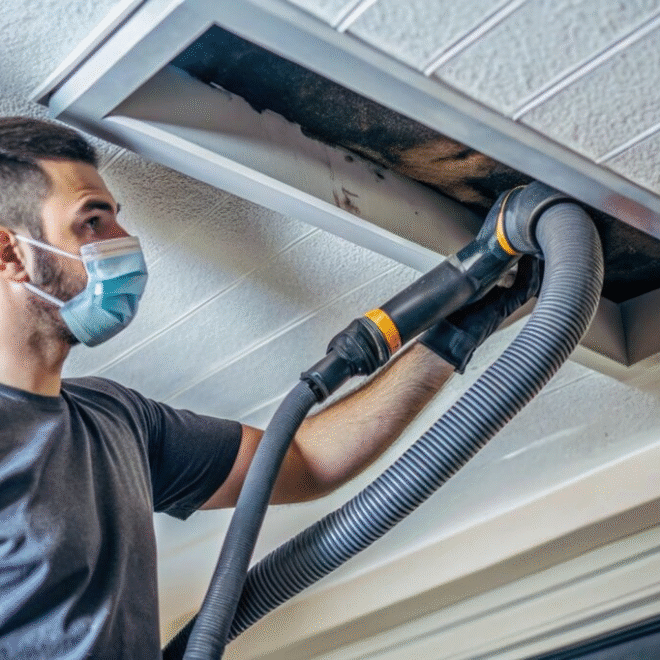

If you have pets or notice extra dust around your home, your air ducts may be quietly collecting more than just air. Pet hair, dander, and dust can build up over time, affecting the air you breathe and even making your HVAC system work harder. Regular cleaning is key to keeping your home fresh, healthy, and comfortable.
In this blog, we’ll share essential air duct cleaning tips specifically for homes with pets and high dust levels. You’ll learn practical steps to reduce allergens, improve airflow, and protect your family’s indoor air quality all year round.
Dust + Pet Dander in Air Ducts: The Hidden Sources That Keep Coming Back
Your ductwork does more than push air around. It’s a collection point for everything your pets shed and track through the door. Once you understand where contamination accumulates, you can clean strategically instead of blindly.
Get this: roughly 66% of U.S. households, that’s around 86.9 million homes, have at least one pet . Every shake, every stretch, every time your cat grooms herself, microscopic skin flakes and loose hair go airborne. Those particles get sucked into return vents, settle throughout duct runs, and coat blower compartments.
Spring and fall? Shedding season makes everything worse. Add puppies, kittens, or litter boxes into the mix and your system gets overwhelmed fast. Light dander floats easily into returns and travels everywhere your system reaches. Meanwhile, heavier fur clumps pile up right at registers and intake grilles where suction is strongest.
Phoenix, Arizona, is known for its dry desert climate and frequent dust storms, which can make indoor air quality a real challenge, especially for homes with pets. Pet hair, dander, and desert dust can accumulate quickly in air ducts, reducing efficiency and circulating allergens throughout your living space. Homeowners, especially those dealing with fine grit mixed with pet debris, often rely on air duct cleaning phoenix specialists who understand this particular challenge. Blower compartments trap sticky residue. Coil fins get matted with layers that choke airflow and kill efficiency.
Early warning signs your HVAC is redistributing contaminants
Dust reappears on your coffee table within hours. You smell something musty or animal-like when the system kicks on. Your family sneezes more whenever heating or cooling runs. Certain rooms feel stuffy while others get weak airflow.
Black streaks appear around supply registers. These aren’t minor quirks, they mean your system is spreading contamination instead of filtering it.
Now that you know *where* the buildup happens, let’s talk about *why* tackling pet dander in air ducts matters beyond just making your home look cleaner, it starts with your family’s health.
Health + Comfort Payoffs of Air Duct Cleaning for Pets
Cleaner ducts deliver more than appearances suggest. You’ll notice real improvements in breathing, comfort, and how your system performs once you reduce what’s cycling through your home.
Dander particles are absurdly small, tiny enough to float for hours and penetrate deep into airways. When your HVAC turns on, it yanks settled dander from ductwork and distributes it room by room.
Symptoms often spike at night or early morning when systems run most frequently. For anyone with sensitivities, this constant exposure makes quality sleep nearly impossible and daytime comfort a pipe dream.
Pre-Clean Checklist: Set Up Your Home for Better Results
Preparation prevents frustration. It also ensures your cleaning reaches problem zones instead of wasting effort.
Identify supply vs. return vents
Returns are typically larger, fewer, and positioned in hallways or central areas. They usually have a filter slot nearby. Supply vents are smaller, more numerous, and placed in individual rooms. Knowing the difference prevents wasted time, returns are where contamination enters.
Safety and prep steps
Keep pets contained in a separate room while you work. Shut off your HVAC at the thermostat and main breaker so dust doesn’t blow everywhere. Lay drop cloths under vents you’ll be removing. If dust bothers you, wear a mask and eye protection.
Air Duct Cleaning Tips: High-Impact DIY Steps That Actually Reduce Dust
These steps target zones where DIY effort makes the biggest difference in how to reduce dust in home environments dominated by pets.
Register + vent cover deep-clean
Pull all covers and soak them in warm, soapy water. Scrub with a soft brush to remove stuck-on grime. Wipe wall or ceiling edges where dust creates dark “shadow” marks. Let the covers dry completely before reinstalling, moisture inside ducts invites mold.
Return vent and surrounding area reset
Vacuum the return grille thoroughly using a brush attachment. Wipe reachable surfaces inside the return box with a damp microfiber cloth. Seal visible gaps around the return frame with a paintable caulk, those leaks let unfiltered air and dust bypass your filter entirely.
Pet Dander Control That Competitors Miss: Whole-Home “Capture + Contain” System
Stopping contamination at the source amplifies every cleaning effort you make.
Air purifier placement that supports HVAC instead of fighting it
Position portable purifiers near pet beds, litter boxes, and bedrooms. Don’t block return vents that disrupt airflow. Check the purifier’s CADR (Clean Air Delivery Rate) to match room size. Purifiers capture localized particles before they reach ductwork, reducing overall system load.
Humidity and dander: the overlooked comfort lever
Target indoor relative humidity between 30–50%. Too-dry air lets dander and dust float longer; too-humid conditions encourage mold and bacterial growth. Use a simple hygrometer to monitor levels. Adjust with a humidifier in winter or dehumidifier in summer depending on your climate.
Once you’ve intercepted dander at the source, ensure your HVAC system isn’t sabotaging you by pulling dust from hidden leaks or neglected components.
Professional Air Duct Cleaning: Service Standards That Separate Real Results From Scams
Some situations demand professional help. Knowing what legitimate air duct cleaning for pets looks like protects you from wasting money.
Prices that seem suspiciously low usually are. Legitimate cleaning requires labor, equipment, and time. Companies that skip inspection photos, don’t use agitation tools, or rely solely on high-pressure air are cutting corners. Avoid providers who aggressively upsell unnecessary add-ons without justification.
Timing guidance
Experts recommend air duct cleaning every 3-5 years or even more often if you have pets or allergies . Homes with multiple shedding pets, post-renovation dust, persistent odors, or visible debris inside vents should consider shorter intervals. Use event-based triggers rather than arbitrary schedules.
While DIY sealing and maintenance accomplish a lot, some situations demand professional intervention, here’s how to recognize when it’s time and how to avoid getting scammed.
Wrapping Up Your Dust-Free Strategy
Pet dander in air ducts and relentless household dust aren’t inevitable, they’re manageable with the right mix of routine maintenance, source control, and occasional professional help.
Focus on high-impact zones like returns and filters, upgrade your capture systems with better filtration and vacuuming techniques, and address leaks that let unfiltered air into your ducts. When contamination gets heavy or symptoms persist, bring in a vetted professional. Your home can feel fresh, your family can breathe easier, and your HVAC can run efficiently, all without constantly fighting the same dust battles every week.
Your Questions About Air Ducts, Pets, and Dust, Answered
Cleaning removes accumulated dander reservoirs that HVAC systems recirculate. Combined with filtration and source control, it can meaningfully reduce airborne triggers, though results vary by contamination level and household conditions.
Purifiers handle airborne particles in specific rooms. Duct cleaning addresses settled debris inside the distribution system that purifiers can’t reach. Both work best together as complementary strategies.
You can safely vacuum accessible areas near registers and returns. Avoid forcing tools deep into flexible ducts or past bends. For blower compartments and full-system cleaning, hire professionals with proper equipment.