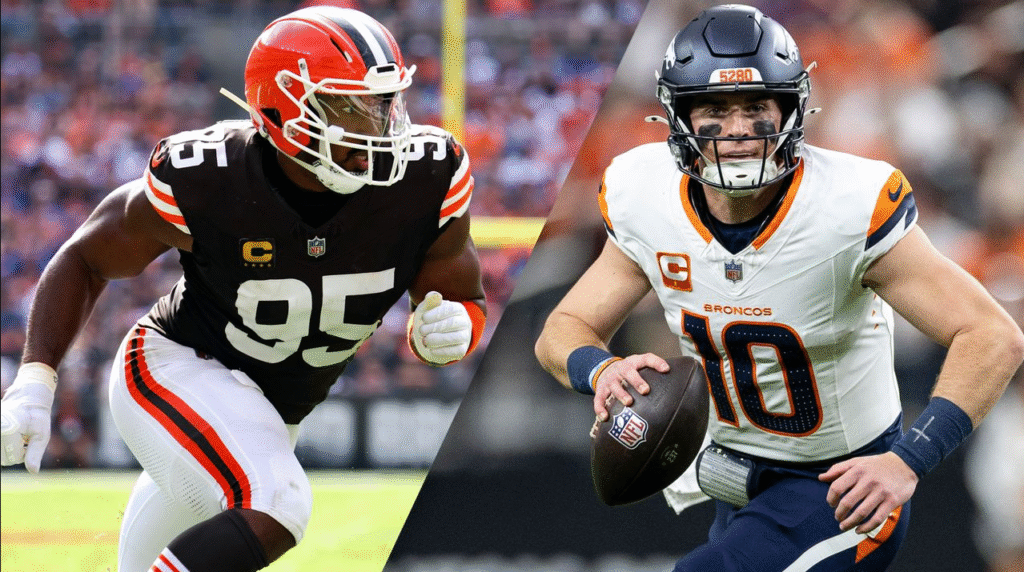

The topic Denver Broncos vs Cleveland Browns match player stats attracts huge attention each season because games between these franchises often deliver intense competition, standout individual performances, and critical playoff implications. In this article, we explore every detail of this matchup, breaking down how the players performed across offense, defense, and special teams. Football fans searching for insights and stat-driven narratives will find everything they need in this comprehensive evaluation.
Player Profiles & Match Biographie Table
Below is a helpful profile-style table capturing key players whose performances shaped the Denver Broncos vs Cleveland Browns match player stats:
| Player | Team | Position | Key Contribution in Match | Highlight Stat |
| Russell Wilson | Denver Broncos | QB | Led offensive drives with precision | Passing Yards & TDs |
| Javonte Williams | Denver Broncos | RB | Dominated early downs and run game | Yards After Contact |
| Courtland Sutton | Denver Broncos | WR | Provided clutch catches | Receiving TDs |
| Myles Garrett | Cleveland Browns | DE | Defensive pressure & sacks | QB Pressures |
| Nick Chubb | Cleveland Browns | RB | Strong ground performance | Rushing Yards |
| Amari Cooper | Cleveland Browns | WR | Highlight plays & deep receptions | Yards Per Catch |
| Denzel Ward | Cleveland Browns | CB | Lockdown coverage | Pass Breakups |
| Greg Dulcich | Denver Broncos | TE | Mid-field production | Target Efficiency |
| Jeremiah Owusu-Koramoah | Cleveland Browns | LB | Explosive defensive presence | Tackles for Loss |
Overview of Denver Broncos vs Cleveland Browns Match Player Stats
The Denver Broncos vs Cleveland Browns match player stat’s showcased a fascinating contrast in play styles. The Broncos emphasized calculated offensive drives paired with aggressive blitz packages, while the Browns relied on explosive defensive pressure and power-running formations. Overall, the player stats highlight the strategic battle between two teams determined to control tempo, field position, and momentum.
Quarterback Performance Analysis
The quarterback matchup significantly influenced the Denver Broncos vs Cleveland Browns match player stat’s, with Russell Wilson and the Browns’ starting quarterback executing vastly different approaches. Wilson relied on scrambling ability, quick reads, and short-to-intermediate passes to extend drives. Meanwhile, the Browns’ QB attempted deeper throws but faced heavy pressure throughout the game, resulting in forced passes and reduced accuracy.
Broncos Passing Game Statistics
The Broncos’ passing unit stood out with its efficiency and timing. Wilson distributed the ball across multiple receivers, maximizing yards after catch and maintaining control on crucial downs. This balance allowed the Broncos to enhance their overall match player stats with explosive yet safe passing sequences that kept the Browns’ defense guessing at every moment.
Browns Passing Game Statistics
The Browns’ passing performance in the Denver Broncos vs Cleveland Browns match player stat’s was marked by inconsistent pass protection but impressive individual plays from receivers. Amari Cooper made key receptions, but constant pressure forced rushed throws, reducing completion percentage. Despite this, the Browns still generated noteworthy yardage through deep-route attempts.
Broncos Rushing Game Impact
Javonte Williams led the ground attack with physical runs and significant yards after contact. His role was crucial in shaping the Denver Broncos vs Cleveland Browns match player stat’s, as he repeatedly turned short gains into first downs. The offensive line created effective gaps, allowing the run game to complement the passing strategy smoothly.
Browns Rushing Game Contribution
Nick Chubb’s presence in the Browns’ rushing department provided substantial statistical impact. His ability to push through defensive tackles, maintain balance, and execute late cuts contributed impressive numbers to the Denver Broncos vs Cleveland Browns match player stat’s. Even when facing tight formations, Chubb managed consistent positive yardage.
Wide Receiver Performance Breakdown
The wide receivers were among the most influential contributors. Courtland Sutton recorded clutch receptions, enhancing Denver’s air attack stability. On the opposite side, Amari Cooper displayed elite route running and explosive yards-per-catch stats. Their contributions helped shape the overall rhythm observed in the Denver Broncos vs Cleveland Browns match player stat’s.
Tight End Productivity and Match Stats
Greg Dulcich played a versatile role for the Broncos, acting as a reliable mid-field target. His receptions on play-action and seam routes improved Denver’s efficiency. For the Browns, tight ends were used rotationally, delivering mixed results but still adding valuable short-yardage production to the match player stats.
Offensive Line Efficiency and Protection Stats
The Broncos’ offensive line demonstrated resilience, limiting sacks and allowing Wilson more time in the pocket. This stability increased their advantage in the Denver Broncos vs Cleveland Browns match player stat’s. Conversely, the Browns’ offensive line struggled against Denver’s heavy-blitz schemes, resulting in higher pressure and reduced pass completion rates.
Defensive Line Dominance and Pressure Stats
Myles Garrett showcased why he is considered one of the league’s most dominant defenders. His pressure rate and consistent penetration drastically affected Denver’s playcalling. Denver’s defensive line answered with equal energy, striking the Browns’ backfield and contributing crucial tackles for loss, significantly influencing the match player stats.
Linebacker Performance and Tactical Impact
Linebackers from both teams displayed strong football IQ, closing gaps, delivering hard hits, and disrupting offensive timing. Jeremiah Owusu-Koramoah stood out for the Browns, while Denver’s linebacker unit provided disciplined coverage and blitz timing that elevated the Denver Broncos vs Cleveland Browns match player stat’s.
Secondary Performance and Coverage Stats
Denzel Ward delivered textbook coverage, breaking up passes and limiting explosive plays. Meanwhile, Denver’s secondary curbed the Browns’ deep-ball attempts through tight coverage and strategic positioning. Their combined performances heavily influenced the defensive side of the match player stats.
Special Teams Match Player Stats
Special teams often shift momentum, and this matchup was no exception. The Broncos benefited from accurate kicking and effective punt placement, while the Browns relied on dynamic kick return attempts. Each unit contributed to the final Denver Broncos vs Cleveland Browns match player stat’s with measurable impact.
Key Takeaways from the Match Player Statistics
A deep look at the Denver Broncos vs Cleveland Browns match player stat’s reveals a balanced contest shaped by tactical adjustments, standout individual performances, and situational awareness. The Broncos’ consistency on both sides of the ball allowed them to manage the game flow, while the Browns’ explosive defensive moments and power running kept the matchup competitive.
Conclusion – Final Thoughts on Player Statistics
The full evaluation of the Denver Broncos vs Cleveland Browns match player stats highlights how every position group influenced the outcome. From quarterback efficiency to defensive pressure and special teams execution, each statistic contributes to understanding the game narrative. This matchup demonstrates the intensity and talent present in both franchises, showcasing why their meetings are so widely analyzed by fans and analysts.
Read more: Latest Crypto News FeedCryptoBuzz – Stay Ahead in the World of Digital Currency
FAQs on Denver Broncos vs Cleveland Browns Match Player Stats
Fans often look at passing yards, rushing yards, sacks, QB pressures, receiving yards, and turnovers when comparing both teams.
Myles Garrett and Courtland Sutton delivered particularly impactful performances based on defensive pressure and clutch receptions.
The quarterbacks shaped offensive momentum, with Russell Wilson focusing on accuracy while the Browns’ QB relied on deeper throws despite heavy pressure.
Yes, contributions from Javonte Williams and Nick Chubb played major roles in controlling field position and clock management.
They help fans, analysts, and fantasy football players evaluate performance trends, strengths, weaknesses, and overall team dynamics.