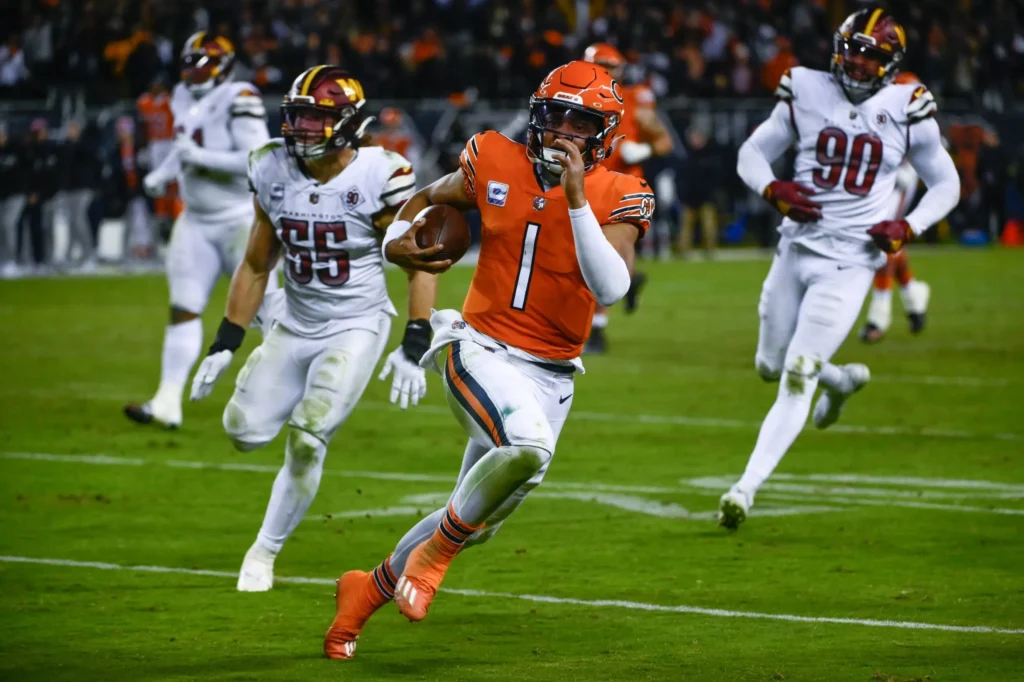

The Chicago Bears vs Washington Commanders match player stats reveal much more than a final score, because they highlight how individual performances, tactical decisions, and momentum shifts shaped the outcome. This matchup brought together two historic NFL franchises with young cores, evolving strategies, and plenty to prove. By analyzing player stats across offense, defense, and special teams, fans can clearly understand how the game unfolded and which athletes made the biggest impact.
Profile Biography Table: Team Overview
| Team | Founded | Conference | Head Coach | Home Stadium | Notable Strength |
| Chicago Bears | 1919 | NFC | Matt Eberflus | Soldier Field | Physical defense |
| Washington Commanders | 1932 | NFC | Ron Rivera | FedExField | Versatile offense |
Chicago Bears Offensive Player Stats
The Chicago Bears relied on a balanced offensive approach, and the Chicago Bears vs Washington Commanders match player stats show how efficiency mattered more than volume. The Bears quarterback managed the game with short-to-intermediate throws, focusing on ball control and minimizing turnovers. His passing yardage was complemented by smart rushing decisions, which helped sustain drives and keep the defense rested.
The Bears’ running backs delivered consistent gains, especially on early downs, because their ability to break tackles set up manageable third-down situations. Wide receivers contributed with timely catches rather than explosive numbers, while the tight ends played a crucial role in red-zone efficiency by securing key receptions near the goal line.
Washington Commanders Offensive Player Stats
On the other side, Washington’s offense showcased aggression, and the Chicago Bears vs Washington Commanders match player stat’s highlight higher passing volume. The Commanders quarterback pushed the ball downfield more often, resulting in stronger passing yard totals but also increased pressure from the Bears’ pass rush. His pocket awareness allowed him to escape sacks, yet hurried throws affected completion consistency.
Washington’s running game showed flashes of explosiveness, particularly on outside zone runs, while wide receivers gained separation through route precision. Slot receivers were heavily involved, converting third downs and keeping drives alive, which demonstrates how Washington leaned on versatility and tempo.
Quarterback Comparison and Efficiency
Quarterback play always defines a matchup, and the Chicago Bears vs Washington Commanders match player stat’s underline contrasting styles. The Bears quarterback prioritized efficiency, posting a solid completion percentage with limited mistakes. In contrast, the Commanders quarterback produced more total yards, although under heavier defensive pressure.
When comparing passer ratings, the Bears quarterback benefited from fewer risky throws, while Washington’s signal-caller showed resilience by continuing to attack vertically. Therefore, efficiency versus aggression became a central theme of the game.
Rushing Game Impact and Player Contributions
Rushing stats played a vital role in shaping momentum, and the Chicago Bears vs Washington Commanders match player stat’s clearly show that ground control mattered. The Bears’ running backs averaged steady yards per carry, which helped dominate time of possession. Their ability to gain positive yardage on first down reduced defensive predictability.
Meanwhile, Washington’s rushing attack relied on fewer carries but delivered occasional explosive runs. Although the Commanders did not control the clock as effectively, their rushing efficiency forced the Bears to respect play-action, opening up passing lanes later in the game.
Receiving Leaders and Target Distribution
Receiving stats often reveal offensive priorities, and the Chicago Bears vs Washington Commanders match player stat’s show distinct target distribution patterns. The Bears spread the ball evenly, ensuring that no single receiver dominated targets, which kept Washington’s defense guessing. Wide receivers focused on yards after catch, while tight ends were heavily involved in short-yardage scenarios.
Washington’s receivers, however, featured a clear hierarchy. The top wideout led in both receptions and yardage, while secondary targets contributed with crucial catches on third downs. This approach reflected Washington’s confidence in its receiving corps to win individual matchups.
Defensive Standouts for the Chicago Bears
Defense remained a defining strength for Chicago, and the Chicago Bears vs Washington Commanders match player stat’s highlight strong tackling and disciplined coverage. Linebackers led the team in tackles, consistently stopping runs at or near the line of scrimmage. Defensive linemen applied steady pressure, forcing hurried throws without overcommitting.
The Bears’ secondary limited big plays, allowing short completions but closing quickly to prevent yards after catch. Because of this disciplined approach, Chicago managed to keep Washington’s scoring opportunities in check for much of the game.
Defensive Standouts for the Washington Commanders
Washington’s defense brought intensity, and the Chicago Bears vs Washington Commanders match player stat’s reflect aggressive play in the trenches. Defensive ends generated pressure that disrupted the Bears’ rhythm, while linebackers excelled in pass coverage against tight ends.
The Commanders’ secondary recorded key pass breakups, especially in crucial moments, which prevented Chicago from extending drives. Although the defense allowed sustained possessions, their red-zone performance limited damage and kept the game competitive.
Special Teams and Field Position Influence
Special teams often swing close matchups, and the Chicago Bears vs Washington Commanders match player stat’s emphasize their importance. The Bears’ kicker converted critical field goals, capitalizing on drives that stalled outside the red zone. Punting accuracy helped pin Washington deep, improving defensive positioning.
Washington’s return units provided sparks of momentum with solid kickoff and punt returns. However, slight inconsistencies in coverage allowed the Bears to maintain favorable field position throughout key stretches of the game.
Key Turning Points Reflected in Player Stats
Every game has defining moments, and the Chicago Bears vs Washington Commanders match player stat’s highlight several turning points. A third-quarter defensive stop by Chicago shifted momentum, while a late Washington drive showcased clutch receiving and quarterback decision-making.
Turnover avoidance also played a role, as the Bears’ conservative offense reduced risk, whereas Washington’s aggressive passing created both opportunities and challenges. These statistical trends explain why the game remained tightly contested until the final stages.
Tactical Adjustments and Coaching Influence
Coaching decisions strongly influenced player output, and the Chicago Bears vs Washington Commanders match player stat’s reveal effective in-game adjustments. Chicago leaned more heavily on the run during the second half, which stabilized their offense and limited Washington’s possessions.
Washington countered by increasing blitz frequency, forcing quicker throws and disrupting Chicago’s passing rhythm. These adjustments demonstrate how tactical flexibility directly affects individual player stats and overall outcomes.
Overall Team Comparison Through Stats
When comparing total yardage, time of possession, and efficiency, the Chicago Bears vs Washington Commanders match player stat’s show two evenly matched teams with different philosophies. Chicago focused on balance and control, while Washington emphasized speed and aggression.
Penalty discipline favored the Bears slightly, contributing to sustained drives, while Washington’s higher explosive play rate kept the scoreboard competitive. These contrasting statistical profiles explain the narrow margins that defined the matchup.
Conclusion
The Chicago Bears vs Washington Commanders match player stats provide a complete picture of how individual performances and team strategies shaped the game. From efficient quarterback play and disciplined defense to explosive receiving and tactical adjustments, every stat tells part of the story. By studying these numbers, fans gain a deeper appreciation for the complexity and excitement that defined this NFL showdown.
Read more: Trine Marie Hansen: The versatile career woman and manager alongside Jonas Vingegaard
Frequently Asked Questions
The Chicago Bears vs Washington Commanders match player stats show a contrast between Chicago’s balanced, efficient approach and Washington’s aggressive, high-tempo offense, highlighting how different strategies can lead to a closely contested game.
Statistically, Washington generated more passing yards, while Chicago excelled in rushing efficiency and time of possession, making the Chicago Bears vs Washington Commanders match player stats a study in contrasting offensive strengths.
Defense played a major role, because both teams limited explosive plays and forced key stops, which is clearly reflected in the Chicago Bears vs Washington Commanders match player stats for tackles, pressures, and pass breakups.
Quarterback efficiency matters because it affects drive sustainability, turnover risk, and scoring chances, and the Chicago Bears vs Washington Commanders match player stats show how efficiency versus aggression shaped the game.
Fans can learn how strategy, discipline, and individual execution influence outcomes, as the Chicago Bears vs Washington Commanders match player stats clearly demonstrate the impact of balanced play and timely performances.